Buried supply lines
Underground Water Leak Detection
The private water service line that runs underground from the meter to your building can leak without any sign indoors. Locating it starts with confirming the symptom really belongs to that line.
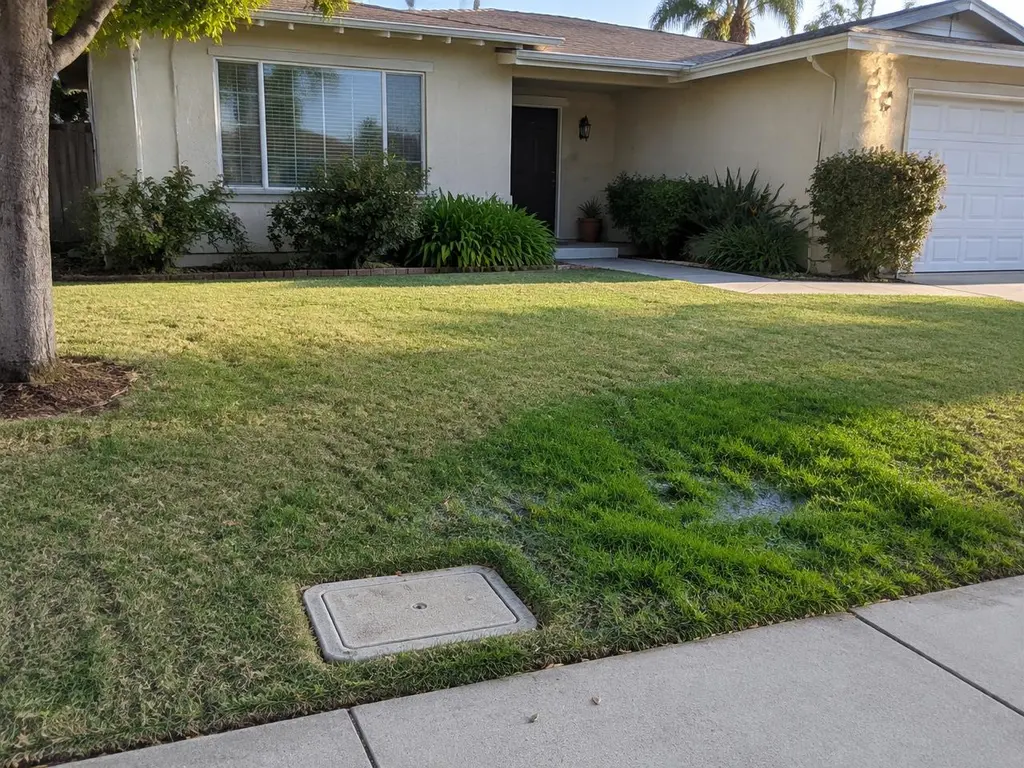
This page covers pressurized water supply lines buried in the ground — not sewer laterals, drain lines or root clearing, which are different services. If you are dealing with slow drains or sewage odors, that is a drain or sewer question rather than leak detection.
Symptoms that may point to a buried supply leak
- A soggy or unusually green strip of yard, especially along the likely line route
- Water usage that rose with no change in household habits
- Lower water pressure throughout the house
- A meter that keeps moving when every fixture and irrigation zone is off
- Water seeping through a sidewalk joint or driveway edge
Each of these can have other causes. Irrigation valves and drip lines are the most common alternative for wet ground. Pressure changes may relate to a pressure regulator or the supplier's system. A neighbor's runoff, poor drainage or a broken downspout can soak a yard too.
What the investigation covers
Scope: meter to building
The line in question usually runs from the customer side of the water meter to where it enters the building. Confirming that the loss is on this section — and not inside the house or on an irrigation branch — is the first job.
Irrigation separated
Irrigation is checked separately because sprinkler mains and zones can mimic a service-line leak. Turning irrigation off at its controller and watching the meter helps tell them apart.
Route, material and depth
The likely route is estimated from the meter position, the entry point and any visible clues. Pipe material affects how well leak sounds travel and whether a line can be traced electronically. Depth and the surface above — lawn, concrete, pavers — affect how clearly a leak can be heard.
Access considerations
Once a likely location is identified, the conversation turns to access: how much digging would be needed, what is in the way, and whether replacing a run of pipe makes more sense than a single repair.
The utility boundary depends on the address
Who is responsible for which part of the service line varies by water supplier and by property. Montebello is served by more than one water supplier depending on location, so check the supplier named on your water bill and ask them about meter-side responsibilities. More on that is on the Montebello service area page.
Limits. Background traffic noise, deep or non-metallic pipe, and very small leaks can make underground leaks harder to pinpoint. A finding should state its confidence and what further steps might narrow it down.
After the leak is found
Repair might be a localized excavation and fitting repair, or replacing a section or the whole run if the pipe is in poor condition. Landscaping and hardscape restoration are usually separate. The repair page walks through how those decisions are made. If you noticed the problem from your bill, the high water bill guide explains what to compare first, and the main Montebello leak detection page covers other leak types.