Concealed interior leaks
Wall and Ceiling Leak Detection
A stain shows where water ended up, not where it started. Timing, likely water travel and the right surface tools help narrow the source before anyone opens drywall.
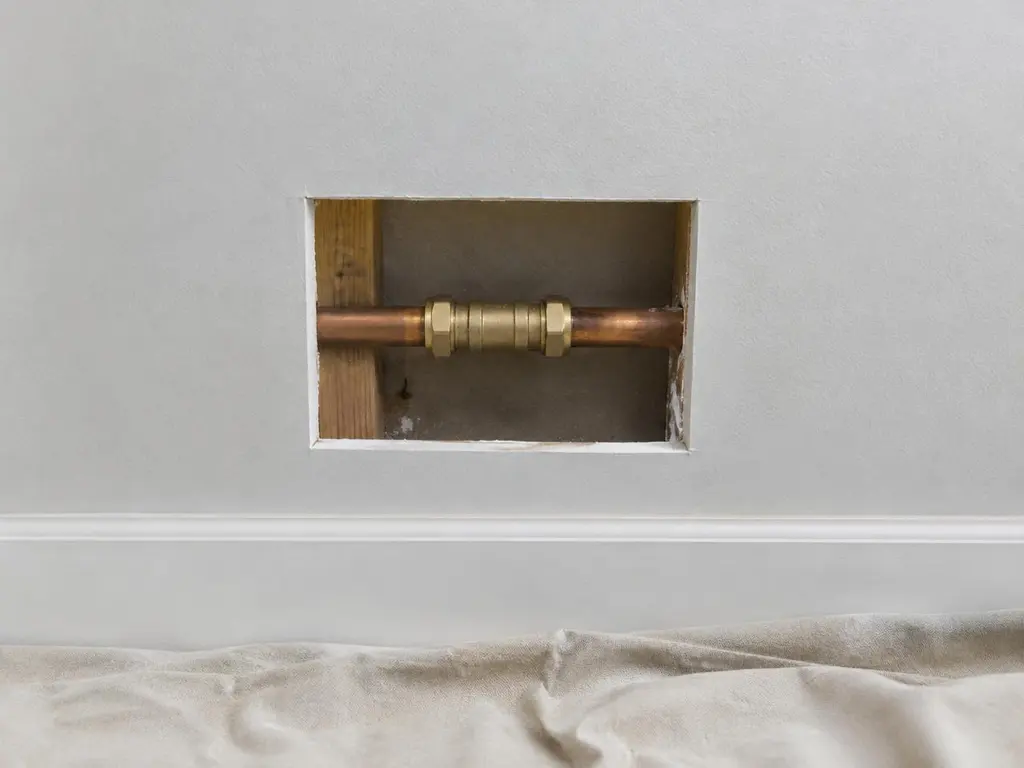
This page covers ordinary residential walls and ceilings where a hidden water line, drain, roof or condensation source might be involved. Which methods are used depends on the home and on what the assessment finds; no method guarantees a location or a damage-free result.
Damage versus source
Water follows framing, pipes and gravity. A ceiling stain can sit several feet from the fitting that caused it, and a damp baseboard may be fed from higher in the wall. Treat the visible mark as a clue and avoid opening it just because it is the wettest spot.
Use timing to narrow it down
- Constant, regardless of use — more consistent with a pressurized supply line.
- During or after a shower, bath, sink or laundry — more consistent with a drain, shower pan or fixture seal.
- After rain — more consistent with roofing, flashing, windows or exterior walls.
- In hot, humid weather or when A/C runs — condensation on ducts, A/C lines or cold pipes.
The water leak vs. drain leak guide has a fuller comparison. If the stain is on an upper-floor ceiling, also consider what sits directly above: a bathroom, a water heater, an A/C unit or the roof.
Supply or drain?
Supply lines are under pressure all the time; drains only carry water when something is used. A meter observation with everything off can suggest a supply leak, as explained in the high water bill guide, though a small leak may not register quickly. Drain issues often need a plumber with a camera rather than leak detection.
Surface methods and their limits
- Moisture meters map how far dampness extends. They confirm moisture, not its source.
- Thermal imaging shows surface temperature patterns, such as warmth from a hot line or cooling from evaporation. It does not see through walls, and patterns alone don't prove a leak.
- Acoustic listening can pick up water escaping a pressurized pipe, but background noise and small leaks can mask it.
- Isolating fixtures — running one fixture at a time — helps link a stain to a specific use.
Preparing and deciding on access
Clear furniture from the wall, empty the cabinets nearby and note what is on the other side or floor above. Once a likely source is identified, talk through the smallest sensible opening, who repairs the pipe and who patches and paints. Damp materials may need drying before they are closed in. See repair after detection for how those steps fit together, or return to leak detection in Montebello.